
The 2025 Ice Storm & GLE's Recovery
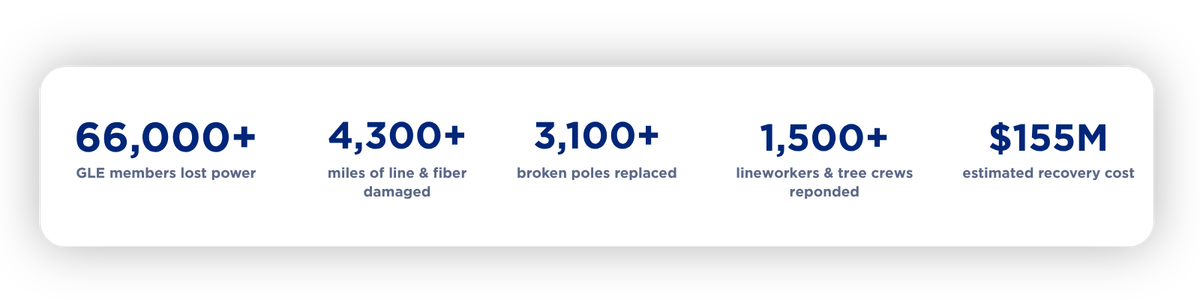
In March of 2025, an unprecedented ice storm struck Great Lakes Energy’s northern service area, lasting three consecutive days and coating electric and fiber infrastructure in 0.25 to 1.5 inches of ice. Combined with high winds, the storm caused catastrophic damage to trees, power lines, and critical infrastructure. This storm tested every part of GLE’s system, but it also showed the resilience of our employees, the strength of our communities, and the power of working together.
Here’s what happened, how we responded, and where recovery stands today.
Updated August 2026
WHAT HAPPENED
From the storm to recovery
Recovery didn’t end when the lights came back on. This is the story of the storm, the restoration, and the long road that continues today.
MARCH 28–30, 2025
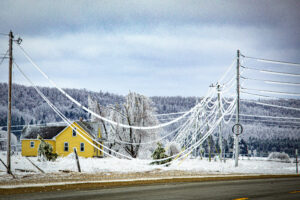
A historic ice storm strikes
Up to 1.5 inches of ice and high winds tore through GLE’s northern service area, damaging electric and fiber infrastructure across roughly three million acres. Nearly 200,000 Michigan residents lost power, including more than 66,000 GLE members. Governor Whitmer declared a 13-county disaster area.
THE DAYS AFTER
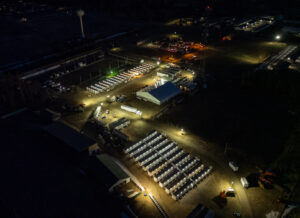
An all-hands restoration effort
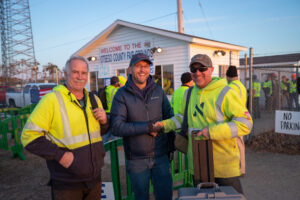
Six transmission substations went offline and took more than four days to restore. With hundreds of miles of roads impassable, the National Guard helped crews reach affected areas. GLE and Presque Isle Electric & Gas stood up a 1,100+ person storm camp at the Otsego County Fairgrounds, and more than 1,500 personnel from across the country joined the response.
INTO APRIL 2025
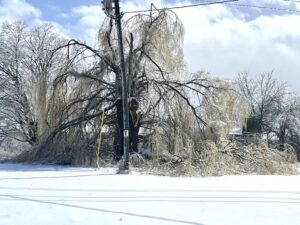
Rebuilding under hard conditions
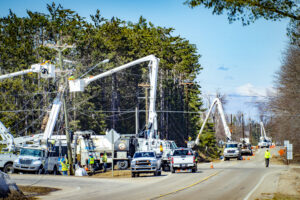
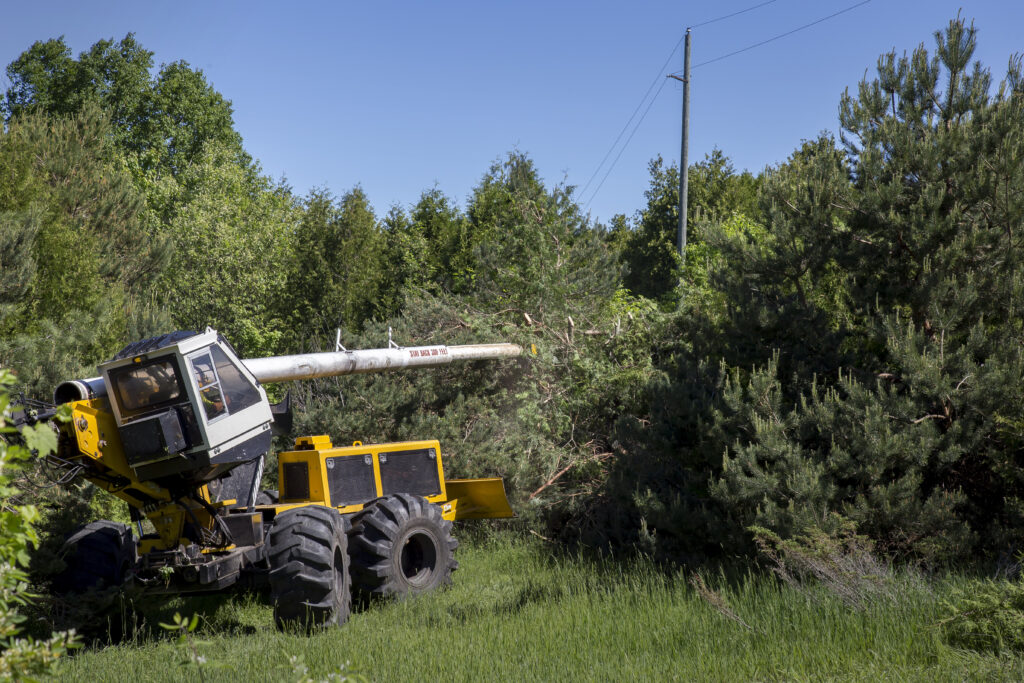
Continued snow, wind, and thawing brought down more trees and limbs, causing new outages. Crews often cut their way into remote areas and rebuilt entire sections of the grid, replacing poles, wire, and transformers, while contending with limited fuel, lodging, and communications.
FALL 2025
Confronting the cost
Recovery costs reached an estimated $155 million, far beyond the typical annual storm budget, and GLE secured emergency financing to keep restoration moving. To manage these and other rising costs, the Board approved rate adjustments effective Nov. 1, 2025. Acting early helps limit the long-term costs members ultimately pay through their rates.
MARCH 13, 2026
FEMA approves disaster category
Nearly a year after the storm, FEMA approved Category F funding for permanent utility repairs. GLE has submitted thousands of documents to support reimbursement across eligible categories, and continues to advocate for its members.
TODAY & ONGOING
A multi-year recovery continues
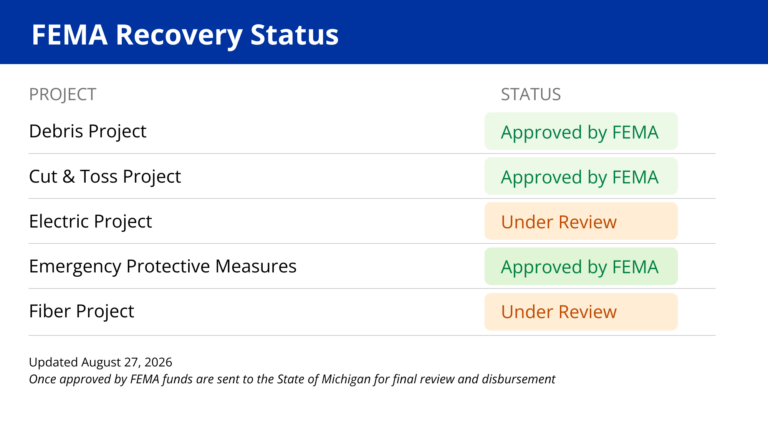
Reimbursement is arriving in stages as each project clears federal and state review. Funds repay what GLE already borrowed to recover from the storm. We’ll keep this page updated as recovery continues.
Ice Storm FAQ
How much did the March 2025 ice storm cost GLE and who pays for it?
GLE is a member-owned, not-for-profit electric cooperative, meaning we do not have investors to absorb costs or provide additional revenue. Instead, the cooperative relies on the rates paid by its members to cover all expenses. This includes storm-related costs that are not reimbursed by state or federal disaster aid. As a member-owned electric cooperative, costs are shared across the entire membership to ensure reliable service for everyone. While rates are structured by member class (such as residential or business), extraordinary events like major storms are always a shared responsibility, not just for those directly affected.
The ice storm caused unprecedented damage to the northern portions of GLE’s service area, resulting in significant costs, currently estimated at $155 million. While a federal disaster was declared, there remains considerable uncertainty about what expenses will qualify for reimbursement. Federal aid may cover up to 75% of eligible costs. The state may contribute up to 25%, but no funding has been committed, meaning GLE is responsible for at least a portion of all expenses and likely more.
To help offset these storm-related costs, along with rising energy supply, infrastructure investment, and operational expenses, GLE’s Board of Directors approved rate changes on Sept. 17, which went into effect on Nov. 1, 2025, for all rate classes. These adjustments are designed to fairly distribute costs across the membership while generating the necessary revenue to maintain the cooperative’s financial stability and ensure continued delivery of safe, reliable electric service to homes and businesses.
Does GLE budget for storm restoration costs?
Yes. Knowing how unpredictable Michigan’s weather can be and the rural nature of our service area, GLE allocates a portion of its annual budget for storm restoration costs. However, the scope of the damage caused by this ice storm far exceeds anything GLE has ever experienced.
Does GLE have insurance to cover storm damage?
While GLE does carry insurance on its buildings and their contents, vehicles, and equipment, we do not carry insurance that covers the costs of repairing storm-related infrastructure damage. That’s because the cost of insuring the electrical infrastructure for a utility such as GLE would be so high that few, if any, insurance companies offer it.
It is more cost-effective for our members if we mitigate the risk of storm damage through regular system maintenance and vegetation management and pay for actual storm damage costs as they occur.
What measures have been taken to request state and federal assistance, including FEMA?
March 31, 2025 – State Emergency Declaration
Governor Whitmer declared a state of emergency, initially covering 10 counties, later expanded to 13. The Michigan National Guard was deployed and an energy emergency declared to facilitate fuel and resource delivery to impacted areas.
May 16, 2025 – Major Disaster Request Submitted
Governor Whitmer formally requested a Presidential Major Disaster Declaration to support recovery, restoration, and future mitigation. Please note federal aid only covers up to 75% of eligible expenses with the other 25% coming from the affected entity (in this case, GLE) or the state of Michigan, who has not committed towards the cost-share. Interest on emergency loans is ineligible for FEMA aid and eligible expense reimbursement is not guaranteed. Expenses can only be claimed for the categories that were declared.
VIEW THE BIPARTISIAN SUPPORT LETTER
Late July 2025 – Federal Disaster Declaration – Partial Approvals, Major Denials
President Trump approved a major disaster declaration, unlocking FEMA Public Assistance funding.
While FEMA approved many funding categories, it denied key components of the state’s request:
- Public Assistance (PA) – Category F: Permanent repairs to utility infrastructure
- Individual Assistance (IA): Support for residents with housing or personal losses
- Hazard Mitigation Grant Program (HMGP): Long-term risk mitigation funding
August 25, 2025 – Formal Appeal Submitted
- Governor Whitmer issued a formal appeal within the 30-day window, providing updated data and arguments, aiming to reverse FEMA’s denials.
- Governor Whitmer highlighted the dire implications for hard-hit rural utilities like Presque Isle Electric & Gas Co-op (PIE&G) and Great Lakes Energy (GLE), which face hundreds of millions in recovery costs.
- VIEW THE FULL LETTER
September 3, 2025 – Petition for Appeal Approval Activated
Voices for Cooperative Power (VCP) facilitated a petition campaign urging President Trump to approve Governor Whitmer’s appeal for additional federal disaster aid and assistance. This petition was submitted on Sept. 16, 2025.
Oct. 24, 2025 – Denial
FEMA denies State of Michigan Appeal
March 13, 2026 – Category F Approved
Great Lakes Energy has received confirmation from the State of Michigan that FEMA approved Category F (Utilities) funding related to the March 2025 ice storm that caused widespread damage to electric infrastructure across Northern Michigan.
While this is an important step forward, FEMA must still review submitted storm recovery costs before determining what expenses qualify and what amount may ultimately be reimbursed.
Until that process is complete, Great Lakes Energy’s current electric rates remain unchanged. While this funding will not directly lower electric bills, it would help offset significant storm recovery costs and limit future cost pressures for members.
Has GLE received FEMA reimbursement for the 2025 ice storm?
Why have my rates changed?
We know every increase is felt at home, and we don’t take that lightly. Rates reflect many factors: the cost of rebuilding a stronger, more reliable system, inflation in materials and equipment, and broader energy costs. The 2025 ice storm alone drove an estimated $155 million in recovery costs, and FEMA reimbursement offsets only a portion of that.
Rate decisions reflect the full, long-term picture of running the cooperative, never any single reimbursement.
Will disaster relief funding result in a rate reduction?
No. We understand this is the question on most members’ minds, and you deserve a direct answer. The reason it won’t change your rates is that this money isn’t new income for the cooperative; it repays funds we already borrowed and spent to restore power after the storm.